Key Takeaways
-
A vision board is a visual roadmap for your goals, activating your brain's Reticular Activating System (RAS) to spot opportunities and stay motivated.
-
The most effective process involves deep reflection, gathering resonant visuals, and daily engagement—not just a one-time craft project.
-
Digital tools offer unparalleled flexibility, while physical boards provide a tangible, tech-free experience. A hybrid approach often yields the best results.
-
Specialized boards for students or manifestation focus on specific life areas and emotional states, increasing clarity and alignment.
-
Modern AI tools like PearlFrame can help you create completely custom, personal imagery for your vision board that generic stock photos can't match.
Introduction
Have you ever felt like your dreams and goals are stuck in your head, too vague to act on? What if you could pull them out, give them form, and create a daily visual reminder that actively programs your mind for success? Learning how to make a vision board is that powerful process. It’s more than just a trendy art project; it's a strategic tool for goal-setting, motivation, and personal alignment used by everyone from students to CEOs. This comprehensive guide will walk you through exactly how to create a vision board that works, backed by neuroscience and modern digital tools, so you can stop dreaming and start building the future you visualize.

What is a Vision Board?
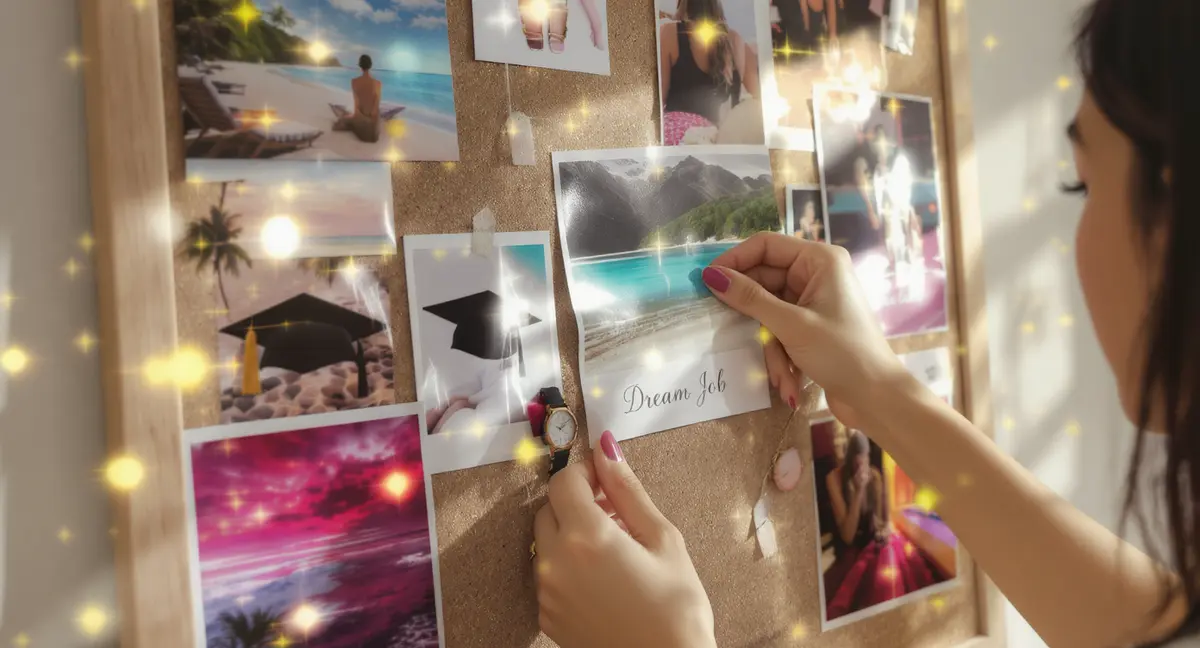
A vision board (also called a dream board or goal board) is a curated collection of images, words, and symbols that represent your aspirations, goals, and the feelings you want to cultivate in your life. Think of it as a visual mission statement or a roadmap for your future.
It can be physical—a collage on a poster board or a collection of items on a corkboard—or digital, living on your phone, computer, or in a dedicated app. The core principle is constant visual exposure, which trains your brain to focus on what matters most to you according to a guide from Freedom Matters.
Why Vision Boards Work: The Science of Visualization
Before we dive into the "how," it's important to understand the "why." Vision boards aren't magic, but they are neuroscience. Their effectiveness hinges on two key brain functions:
-
The Reticular Activating System (RAS): This part of your brainstem acts as a filter for the millions of bits of information you encounter daily. By repeatedly viewing your vision board, you tell your RAS, "This is important!" It then starts to prioritize opportunities, resources, and ideas that align with your visualized goals, making you more likely to notice them in your daily life as explained in neuroscience research.
-
Mental Rehearsal & Neuroplasticity: When you vividly visualize achieving a goal, you activate the same neural pathways as when you physically perform the action. A study cited by Oprah Daily found that athletes who mentally rehearsed a skill performed nearly as well as those who physically practiced it. This mental rehearsal strengthens the brain connections for that goal, making the desired outcome feel more familiar and attainable.
How to Make a Vision Board: The Complete 7-Step Process
This step-by-step framework synthesizes the most effective practices for how to make a vision board that serves as a dynamic tool, not just a decoration.
Step 1: Reflect & Get Clear on Your "Why"
Don't just grab magazines and start cutting. The power is in the intention. Set aside 30-60 minutes of uninterrupted time for reflection.
- Ask yourself probing questions: Where do I want to be in 1 year? 3 years? What do I want to feel (e.g., peaceful, powerful, free)? What does success look like in my career, health, relationships, and personal growth?
- Pro-Tip: Use the "Wheel of Life" exercise. Draw a circle, divide it into 8 slices (Health, Career, Finance, Family, etc.), and rate your satisfaction in each area from 1-10. This visual instantly highlights where to focus your vision board energy.
Step 2: Gather Your Materials & Inspiration
Now, collect the visual pieces of your puzzle.
- For Physical Boards: Magazines, printed photos, personal mementos (ticket stubs, fabric swatches), markers, glue, and a base (poster board, corkboard, canvas).
- For Digital Boards: This is where modern technology shines. Use Pinterest to collect ideas, stock photo sites for professional images, or your own photo library. For truly unique and personal imagery that generic stock photos can't provide, consider using an AI image generator like PearlFrame. You can describe your exact dream scene—"a writer feeling joyful at a sunlit cabin desk"—and generate a custom image that resonates deeply with you.
Step 3: Source Images That Evoke Emotion
This is the most crucial creative step. Don't just choose pretty pictures; choose images that spark a feeling.
- Focus on the Verb, Not Just the Noun: If your goal is "publish a book," include images of someone writing peacefully, the joy of holding a finished manuscript, or a celebratory coffee. This visualizes the fulfilling process, not just the end result.
- Include Words & Affirmations: Powerful words like "CLARITY," "ABUNDANT," or "BRAVE" can anchor your board. Write them in your own handwriting or find inspiring typography.
Step 4: Compose Your Board with Intention
Arrange your elements before you commit. There's no single right layout, but common approaches include:
- Thematic Sections: Group images by life area (Career, Health, Adventure).
- Central Theme: Place your most important goal or word in the center and radiate other goals outward.
- Free-Form Collage: An intuitive, overlapping mix that feels energetic and artistic.
Play with the arrangement until the overall look fills you with excitement and possibility.
Step 5: Assemble & Finalize
- Physical: Glue, tape, or pin everything down. Add personal touches with paint, glitter, or borders.
- Digital: Use a tool like Canva or Milanote to finalize your layout. Milanote is excellent for this, offering a free-form canvas to organize not just images but also notes, links, and color palettes in one place as highlighted in their vision board guide.
Step 6: Integrate It Into Your Daily Life
A vision board in a drawer is useless. Make it impossible to ignore.
- Placement is Key: Hang your physical board where you'll see it daily—by your bed, on your bathroom mirror, or in your home office. Set your digital board as your phone's lock screen or computer desktop wallpaper.
- Daily Visualization: Spend 2-5 minutes each morning looking at your board. Don't just see it; feel it. Imagine the emotions, sounds, and sensations of your goals as if they're already real.
Step 7: Review, Reflect, and Revise
Your goals will evolve, and that's a sign of growth. Schedule a quarterly "Vision Board Review." What have you accomplished? What no longer resonates? Add new images, remove old ones, or start fresh. A vision board is a living document as recommended by goal-setting experts.
How to Create a Vision Board for Specific Goals
How to Make a Vision Board for Students
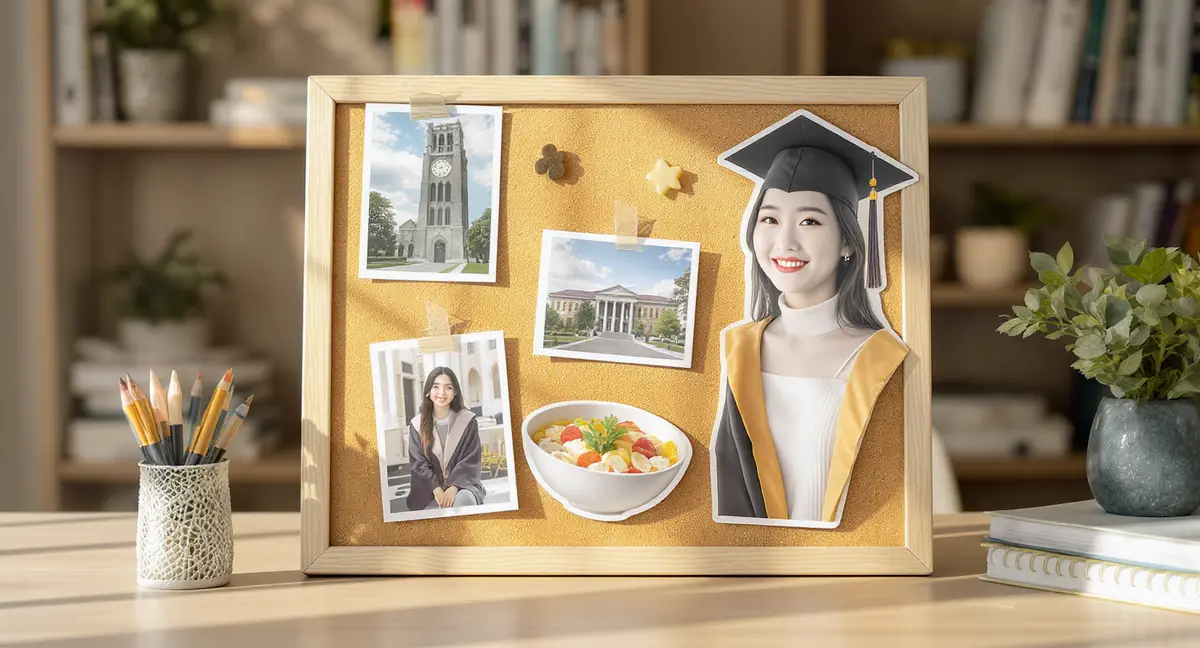
A student vision board bridges academic pressure with personal dreams. Focus on:
- Academic & Career Goals: Pictures of your dream university campus, a specific degree certificate, a professional in your desired field, or a study-abroad location.
- Process & Balance: Include visuals for a healthy study routine—a tidy desk, a nutritious meal, a person meditating, friends laughing. This reminds you that success includes well-being.
- Skill Development: Symbols for skills you want to learn, like a language app logo or a coding screenshot.
How to Make a Vision Board for Manifestation
Manifestation focuses on aligning your energy with your desires. Here, the feeling is paramount.
- Lead with Emotion: Find images that primarily evoke the feeling you want (e.g., peace from a serene lake, freedom from an open road).
- Use the Present Tense: Label images with affirmations like "I am confident in my new role" or "My home is a sanctuary of peace."
- Incorporate the Senses: Add textures (a swatch of luxurious fabric) or scents (a pressed flower) to engage more than just sight.
Ready to bring your own ideas to life? Try creating your own unique images with the AI tool below—it's easier than you think!
Digital vs. Physical Vision Boards: Which is Right for You?
| Aspect | Digital Vision Board | Physical Vision Board |
|---|---|---|
| Creation | Easy to edit, unlimited resources, multimedia (video/GIFs). | Tactile, immersive, craft-like experience. |
| Portability | Always with you on your phone/tablet. | Stays in one place, not portable. |
| Visibility | Can get lost in digital noise; requires intentional viewing. | A constant, hard-to-ignore physical presence. |
| Best For | Tech-savvy users, those who love to update, easy image sourcing. | Those who learn kinesthetically, want a screen-free ritual, enjoy crafts. |
The Winner? A Hybrid Approach. Create a beautiful physical board for your home and a simplified digital version (like a PearlFrame generated image of your core theme) as your phone wallpaper for constant, on-the-go reinforcement.
How to Make a Vision Board on Your Phone
Creating a vision board on your phone is perfect for a digital-native, always-moving lifestyle.
- Choose Your App: Dedicated apps like "Vision Board – Perfectly Happy" offer built-in image libraries and affirmation collections. For full creative control, use design apps like Canva or collage makers.
- Gather Images: Save inspiration directly from Instagram, Pinterest, or web searches to your camera roll.
- Design Your Layout: Use the app's tools to arrange your images, add text overlays, and choose a cohesive color scheme.
- Set as Wallpaper: Make your finished board your phone's lock screen and home screen. Now, every time you check your phone—dozens of times a day—you get a micro-dose of inspiration.
Advanced Tips & Common Mistakes to Avoid
- Tip: Go Beyond Pictures. Include a small object, a quote from a mentor, or a graph of a financial goal. Depth creates engagement.
- Tip: Visualize the Journey. Include images of the steps (running shoes for a marathon goal) not just the finish line (the medal).
- Mistake: Making it Once, Forgetting it Forever. Engagement is non-negotiable. Schedule time with your board.
- Mistake: Using Someone Else's Dreams. Ensure every image resonates with you, not what you think you should want.
- Mistake: Overcomplicating It. Start simple. A one-page digital collage or a small poster board is a perfect beginning.

Conclusion
Learning how to make a vision board is learning how to direct your focus, energy, and subconscious mind toward the life you truly want. It's a practice that combines the clarity of goal-setting with the power of visual psychology. Whether you choose a digital canvas, a physical board, or a blend of both, the key is to start. Define what lights you up, find images that make your heart beat faster, and place that vision where you can't help but see it every day. And if you're looking for the perfect, personalized image that captures a dream that doesn't exist in any magazine, remember that you can always Try PearlFrame to generate a unique visual cornerstone for your board. Your future is waiting to be visualized—go create the map.
FAQ
Do vision boards actually work?
Yes, when used actively. Vision boards leverage proven psychological principles like the Reticular Activating System (RAS), which trains your brain to notice relevant opportunities, and mental rehearsal, which primes your neural pathways for success. They are a tool for focus and motivation, not a magic wand. Their effectiveness is confirmed by both neuroscience and the experience of countless goal-achievers according to research compiled by experts.
What should I put on my vision board?
Put anything that visually represents your goals and desired feelings. This includes photos of dream destinations, career aspirations, or healthy lifestyles; words and affirmations like "peace" or "I am capable"; symbols like a graduation cap or a house icon; and even textures or small objects. The most important criterion is that each item evokes a strong, positive emotional response in you.
How often should I look at my vision board?
Daily, ideally. Integrate a 2-5 minute viewing into your morning routine. This daily engagement is what reprograms your subconscious mind and keeps your goals at the forefront of your awareness. Brief, consistent exposure is far more powerful than occasional long sessions.
Can I make a vision board for just one goal, like a career change?
Absolutely. Focused vision boards can be incredibly powerful. A single-goal board allows you to dive deep, visualizing not just the outcome (the new job title) but every step of the process—updating your resume, networking, the feeling of confidence in an interview, and the celebration of an offer.
How do I make a digital vision board for free?
You have several excellent free options. Use Pinterest to create a secret board and pin inspiration. Canva offers free templates and a drag-and-drop editor perfect for creating a beautiful graphic you can use as a wallpaper. For a more dedicated, feature-rich experience, apps like "Vision Board – Perfectly Happy" offer free core functionality with large image libraries.
Is it bad to change my vision board?
No, it's essential. Your vision board should evolve as you do. Changing it means you're growing, achieving goals, and refining your desires. Schedule a quarterly check-in to update images, add new goals, and remove items that you've accomplished or that no longer align with your path.