
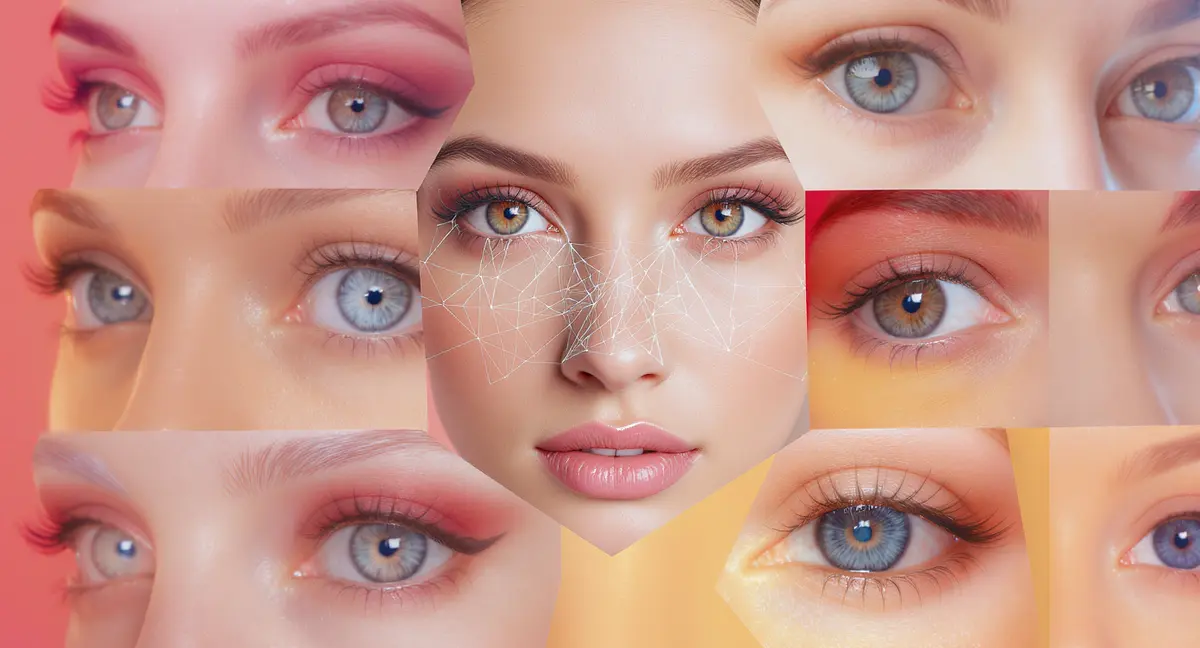
Key Takeaways
-
Understanding your eye shape is the first step to personalized makeup, perfect eyewear, and enhanced natural beauty.
-
A reliable eye shape test involves analyzing your eyelid crease, corner tilt, spacing, and depth using clear, front-facing photos.
-
AI-powered online tools can provide instant analysis, but manual methods based on expert guidelines offer valuable insight.
-
Your eye shape influences makeup application, with techniques tailored to enhance features like almond, round, hooded, or monolid eyes.
-
While eye shape is largely genetic, its appearance can change slightly with age, and all shapes are uniquely attractive.
Introduction
Have you ever struggled with eyeliner that disappears when you open your eyes, or sunglasses that never seem to sit right? The secret to solving these common frustrations lies in understanding the unique geometry of your eyes. Performing a simple eye shape test is more than a beauty buzzword—it's a practical skill that unlocks personalized styling, flawless makeup application, and even better-fitting eyewear. In 2026, the beauty industry is all about hyper-personalization, moving away from one-size-fits-all trends toward techniques that enhance your individual features according to a 2026 beauty trend report. This comprehensive guide will walk you through how to determine your eye shape with photos, using both trusted manual methods and the latest AI technology.

What is an Eye Shape Test?
An eye shape test is a methodical process used to categorize the physical structure of your eyes based on key characteristics like the eyelid crease, the angle of the outer corners, the spacing between the eyes, and their depth in the eye socket. It's not about assigning a "best" or "worst" label, but about creating a blueprint for enhancing your natural beauty. Historically, this required a keen eye and a mirror, but today, you can also conduct an eye shape test online using artificial intelligence that analyzes a photo in seconds. Whether you prefer a manual self-assessment or a digital analysis, the goal is the same: to identify your dominant eye shape—such as almond, round, hooded, monolid, upturned, or downturned—so you can make informed decisions about makeup, glasses, and styling.
Why Knowing Your Eye Shape Matters
Understanding your eye shape provides a foundation for countless aesthetic and practical choices. It’s the difference between guessing and knowing what works for you.
Perfect Your Makeup Application
Makeup techniques are not universal. Eyeliner that looks stunning on almond eyes may smudge on hooded lids, and eyeshadow that opens up round eyes can overwhelm deep-set ones. By knowing your shape, you can apply makeup that complements your structure rather than fighting against it.
Choose Flattering Eyewear
From sunglasses to prescription glasses, the right frame can balance your features and boost your confidence. An accurate eye shape test female or male participants can use helps identify frames that harmonize with your eye's proportions, tilt, and depth.
Enhance Personal Styling
Your eyes are a central facial feature. Understanding their shape allows for more cohesive styling choices, from eyebrow shaping to selecting false eyelashes that enhance rather than obscure your natural look.
Boost Confidence Through Self-Knowledge
Embracing your unique features is empowering. Knowing your eye shape helps you move beyond trend-chasing to develop a signature style that feels authentic and flattering.
How to Determine Your Eye Shape with Photos: A Step-by-Step Manual Test
You don't need specialized equipment to perform a reliable eye shape test. With a clear photo and this expert-backed methodology, you can identify your shape in minutes. This process aligns with steps recommended by dermatologists and beauty experts from sources like Dr. Sabrina and NVISION Centers.
Step 1: Capture the Perfect Reference Photo
The accuracy of your test starts with a good photo. Use these tips for best results:
-
Use Natural Light: Position yourself facing a window. Harsh overhead or dim lighting can cast shadows that obscure your eyelid structure.
-
Face Forward: Look directly into the camera with a neutral, relaxed expression. Avoid tilting your head or squinting.
-
Keep Eyes Open and Bare: Ensure your eyes are fully open and free of heavy makeup. Remove glasses if possible.
-
Take a Close-Up: The photo should clearly show both eyes from brow to upper cheek. A selfie taken from about a foot away is ideal.
This foundational step is crucial for an accurate eye shape test photo analysis, whether you're assessing it yourself or uploading it to an AI tool.
Step 2: Analyze the Eyelid Crease
Examine your photo to see what’s visible on your upper eyelid when your eyes are open and relaxed.
-
Visible Crease: You can see a distinct fold or line across your eyelid. This indicates shapes like almond, round, or deep-set.
-
No Visible Crease: Your eyelid appears as one smooth surface from the brow bone to the lash line. This suggests a monolid shape.
-
Crease is Hidden: You might feel a crease when you touch your lid, but excess skin from the brow area folds over it, hiding it from view. This is the hallmark of hooded eyes.
Step 3: Determine the Eye Tilt
Imagine or draw a straight horizontal line through the centers of both irises. Now, look at the direction of your outer corners.
-
Outer Corners Angle Upward: Your eyes are upturned, often described as having a natural cat-eye effect.
-
Outer Corners Angle Downward: Your eyes are downturned, giving a gentle, soft appearance.
-
Outer Corners are Level: Your eyes have a straight or neutral tilt.
Step 4: Measure Eye Spacing
Measure the distance between your inner eye corners (the tearducts). Compare this distance to the width of one of your eyes.
-
Closer than One Eye Width: Your eyes are considered close-set.
-
Farther than One Eye Width: Your eyes are wide-set.
-
Approximately One Eye Width: Your eye spacing is average or balanced.
Step 5: Assess Depth and Prominence
This 3D characteristic can be trickier to see in photos but look for these clues:
-
Deep-Set Eyes: Your eyes appear recessed under a prominent brow bone, which may create a natural shadow on the lid.
-
Prominent Eyes: Your eyelids appear more forward-projecting, and the eye area may look more rounded.
-
Neither: Your eyes have a standard, balanced depth.
By combining these observations, you can identify your primary shape. Remember, it's common to have a combination of traits (e.g., almond-shaped eyes that are also slightly deep-set).

The Rise of AI: Taking the Eye Shape Test Online
For those seeking instant analysis, AI-powered tools offer a convenient eye shape test online. These platforms use advanced facial recognition algorithms to scan your uploaded photo, map key landmarks, and classify your eye shape in seconds.
How AI Eye Shape Detectors Work
These tools typically follow a process similar to the manual test but at computational speed:
-
Face and Eye Detection: The AI first locates the face and isolates the eye region.
-
Feature Mapping: It identifies dozens of points around the eyes, lids, and corners to measure proportions, angles, and contours.
-
Classification: The system compares these measurements to a database of known eye shape profiles and calculates a match percentage.
-
Personalized Report: You receive a result—often with a confidence score—and tailored styling suggestions.
While convenient, the accuracy of these tools depends heavily on photo quality. They excel with clear, well-lit, front-facing images but can struggle with poor lighting or angles.
The Role of AI Image Generation in Understanding Features
The underlying technology that powers facial analysis is closely related to AI image generation. Platforms like PearlFrame use sophisticated models like Flux Kontext to understand and recreate complex visual features, including facial anatomy. While PearlFrame is designed for creative image generation, its ability to interpret and render precise facial details highlights how far AI has come in visual comprehension. You can even use such tools to generate reference images of different eye shapes to better train your own eye for the manual test.
Ready to bring your own ideas to life? Try creating your own unique images with the AI tool below—it's easier than you think!
Makeup Techniques Tailored to Your Eye Shape
Once you've completed your eye shape test, you can apply makeup strategies designed to highlight your unique features. Here’s a breakdown based on the most common shapes, incorporating expert advice from makeup artists and beauty professionals.
For Almond Eyes
Considered the most versatile shape, almond eyes have a visible crease and tapered ends. The goal is to enhance their natural balance.
-
Eyeshadow: Use a medium-toned shade to define the crease and a darker color in the outer "V" for depth. A shimmery shade on the center of the lid makes eyes pop.
-
Eyeliner: A classic winged liner complements the natural taper beautifully. Keep the line thin at the inner corner, thickening it slightly as you wing outward.
For Round Eyes
Round eyes show visible white (sclera) above or below the iris, creating a circular, open look. The objective is to add elongation and definition.
-
Eyeshadow: Apply darker shadows on the outer third of the lid and blend horizontally to stretch the eye shape visually.
-
Eyeliner: A winged or cat-eye liner is highly effective for lengthening. You can also tightline the upper waterline to add definition without reducing lid space.
For Hooded Eyes
With hooded eyes, the mobile lid space is reduced because the brow bone skin folds over the crease. The key is to create the illusion of a larger, more defined lid.
-
Eyeshadow: Apply your crease color above your natural crease, on the brow bone. This makes the lid appear larger. Keep the mobile lid light and bright.
-
Eyeliner: Opt for a very thin line or tightlining. Avoid thick, heavy liner on the lid, as it will disappear when your eyes are open.
For Monolid Eyes
Monolid eyes have a smooth lid surface without a visible crease, offering a perfect canvas for bold looks.
-
Eyeshadow: Build dimension with gradient colors. Use darker shades near the lash line and blend upward, incorporating shimmer or matte finishes to create depth.
-
Eyeliner: Bold, graphic liner or softly smudged liner along the lash line can add significant definition and shape.
For Upturned and Downturned Eyes
-
Upturned: Enhance the natural lift with soft, blended eyeshadow that follows the upward angle. Balance can be achieved by adding a touch of shadow or liner to the lower lash line.
-
Downturned: Create a lifting effect by applying darker eyeshadow or eyeliner to the outer third of the eye, angling it slightly upward. Avoid extending liner downward.
Advanced Tips and Professional Considerations
Can Your Eye Shape Change?
While the underlying bone structure of your eye socket is fixed, the appearance of your eye shape can evolve. As noted by beauty experts, aging leads to a loss of skin elasticity, which can cause eyes to become more hooded or downturned over time. Significant weight fluctuations can also alter the fat distribution around the eyes, subtly changing their prominence.
Eye Shape and Facial Aesthetics
From a facial aesthetics perspective, certain eye features are often associated with gender presentation. For example, feminine eyes are frequently described as wider with a more arched brow, while masculine eyes may appear narrower and deeper set according to clinical observations. However, these are broad generalizations, and beauty is profoundly subjective and individual.
Beyond Makeup: Glasses and Accessories
Your eye shape test results are invaluable for choosing eyewear. For instance:
-
Round Eyes: Angular frames (rectangular, square) add contrast and structure.
-
Almond Eyes: Most frame shapes work; focus on proportion relative to your face size.
-
Close-Set Eyes: Frames with a light-colored or clear bridge can help visually widen the gap.
-
Wide-Set Eyes: Frames with a bold, dark bridge draw focus inward for balance.
Conclusion
An eye shape test is a simple yet transformative tool in your beauty and styling arsenal. By learning to determine your eye shape with photos—through either a careful manual assessment or a verified online tool—you gain the knowledge to personalize your approach to makeup, eyewear, and overall presentation. Remember, the goal isn't to fit into a perfect category but to understand your unique features so you can enhance them with confidence. In 2026, the most powerful trend is celebrating individuality, and it all starts with self-knowledge.
Ready to explore the world of AI and visual creativity? While you're mastering your eye shape, consider how tools like PearlFrame can help you generate stunning imagery and visualize concepts with ease. Try PearlFrame today to see how advanced AI can bring your visual ideas to life.
Frequently Asked Questions
How accurate are online AI eye shape tests?
AI eye shape tests can be quite accurate when provided with a high-quality, front-facing photo in good lighting. Their algorithms are trained on vast datasets of facial images. However, accuracy can drop with poor photo quality, unusual angles, or if the eyes are obscured by hair or glasses. For the most reliable results, use the manual test as a verification step.
What is the most common eye shape?
Almond-shaped eyes are often cited as one of the most common and versatile eye shapes. However, prevalence can vary across different populations and ethnicities. All eye shapes are beautifully common in their own right, and there's no single "standard" shape.
I have hooded eyes. Why does my eyeliner always disappear?
This is a classic challenge for hooded eyes! When your eyes are open, the skin from your brow bone folds over your mobile lid, covering the area where traditional eyeliner is applied. The solution is to adjust your technique: apply liner while looking straight ahead into a mirror, or use the "bat wing" technique that creates a shape visible only when your eyes are open.
Can I have more than one eye shape?
Absolutely. Very few people are a textbook example of a single shape. It's extremely common to have a combination, such as almond-shaped eyes that are also slightly upturned, or round eyes that are deep-set. Your eye shape test should help you identify your dominant characteristics for practical application.
Does eye shape affect vision?
In most cases, the external eye shape (lid structure) does not directly affect visual acuity. However, deeply hooded lids can sometimes slightly obstruct the peripheral upper field of view. The internal structure of the eyeball is what determines refractive errors like nearsightedness or astigmatism.
How do I take the best photo for an eye shape test?
For an ideal eye shape test photo, follow these guidelines: use bright, natural light facing you; look directly at the camera with a neutral expression; ensure your entire face is in focus; and avoid smiling or squinting, as this can alter your eyelid appearance. A clear selfie from about 12 inches away is perfect.
Is there a difference between male and female eye shapes?
From a biological perspective, male and female skulls have subtle differences that can influence eye appearance—males often have more prominent brow ridges, leading to deeper-set eyes. However, the range of eye shapes (almond, round, hooded, etc.) exists across all genders. An eye shape test female or male individuals take focuses on the same structural characteristics.
What if my two eyes are slightly different shapes?
Minor asymmetry is completely normal and very common. Many people have one eye that is slightly more hooded or upturned than the other. When applying makeup, you can use technique to create balance, such as applying eyeliner slightly thicker on the lid that appears smaller.